Choose a product.
Test buying intent.
Then build your D2C brand.
Your first decision is what to test, and with whom.
The 90-Day D2C Operator System.
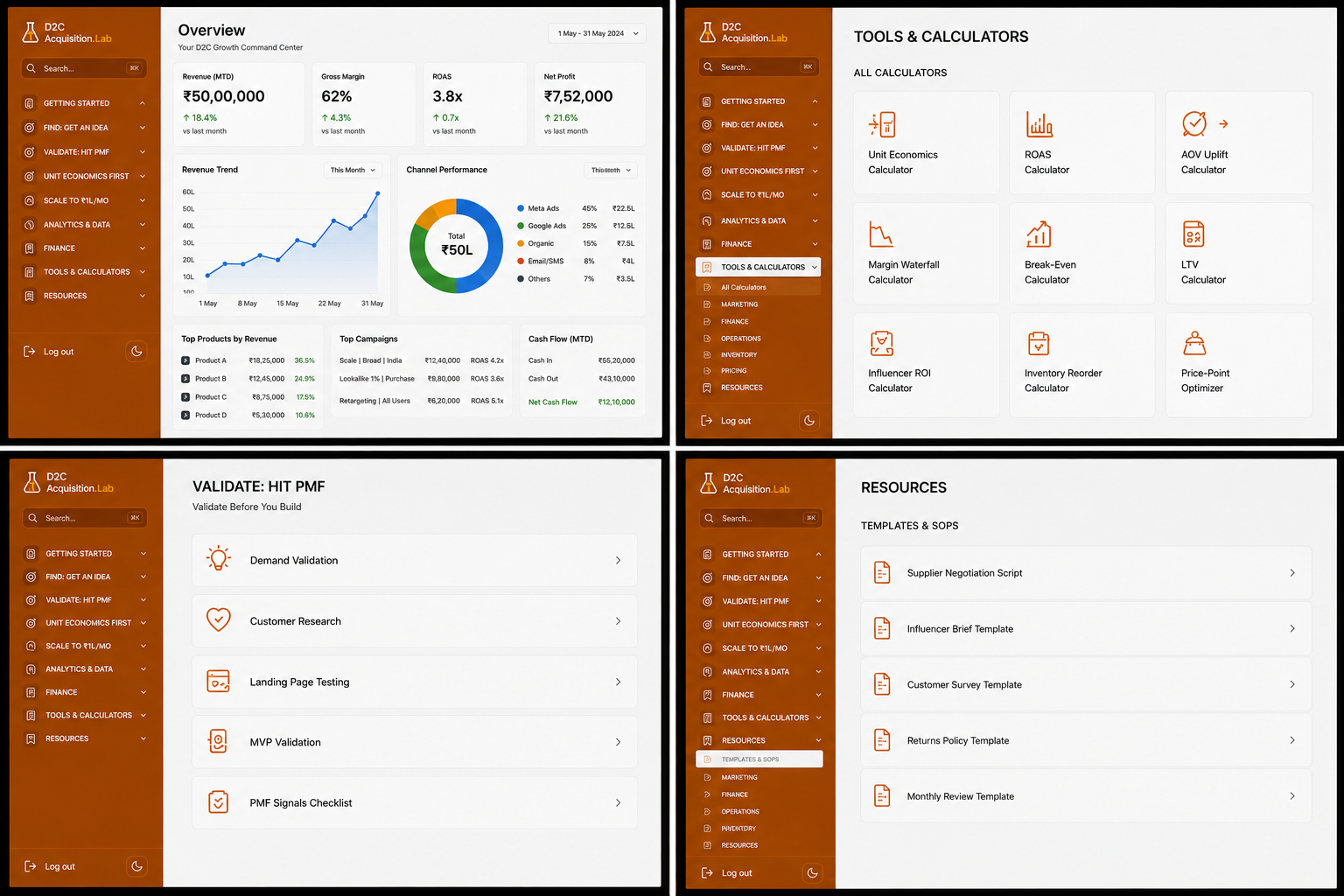
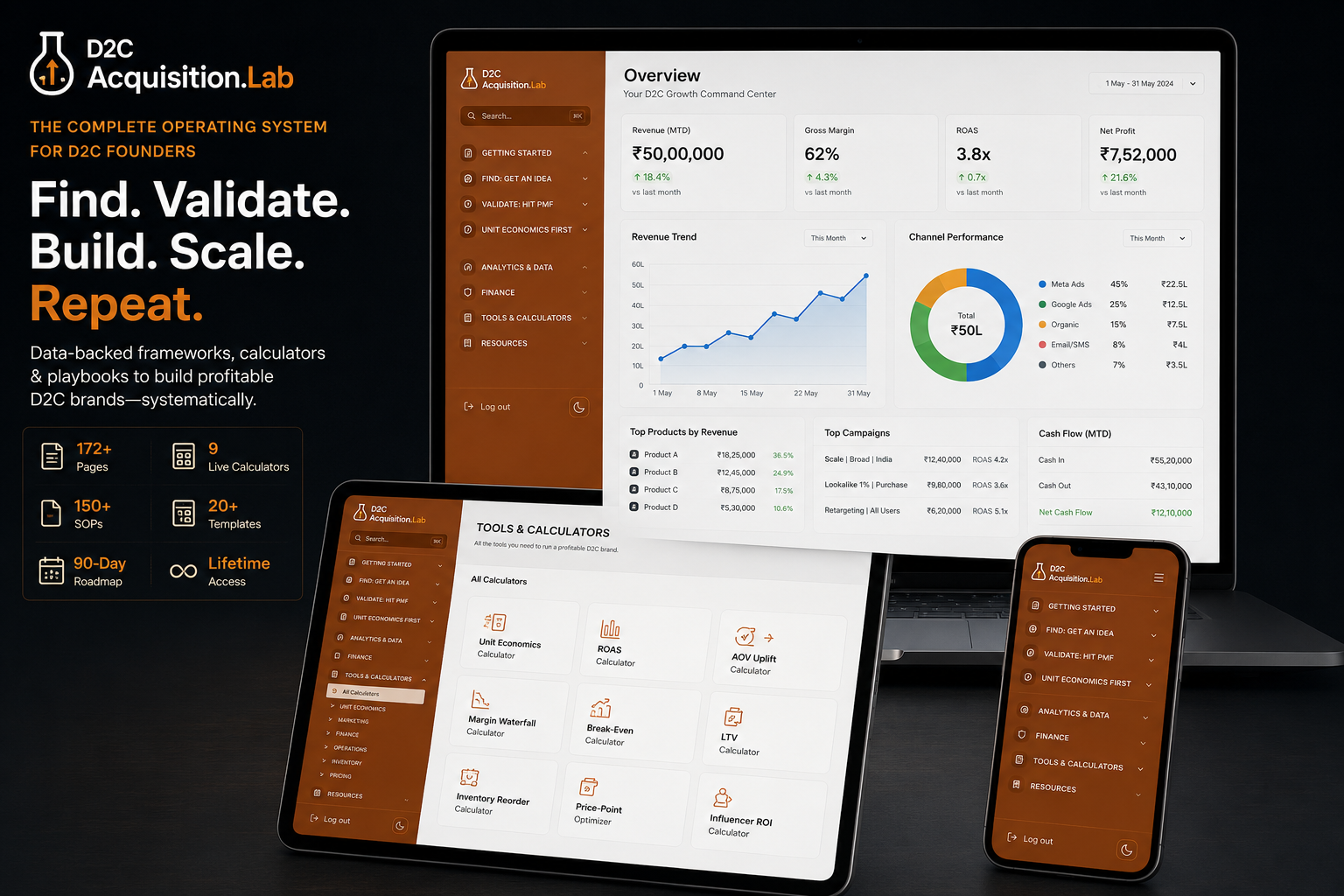
Work through product choice, paid-demand tests, suppliers, costs, store launch and first customers in sequence. Use the written playbooks, calculators and SOPs to make each decision on your own numbers. A 90-day roadmap you can fit around your job, with access for the decisions that follow.
12 execution phases · 163 action steps · 9 live calculators · 50+ SOPs
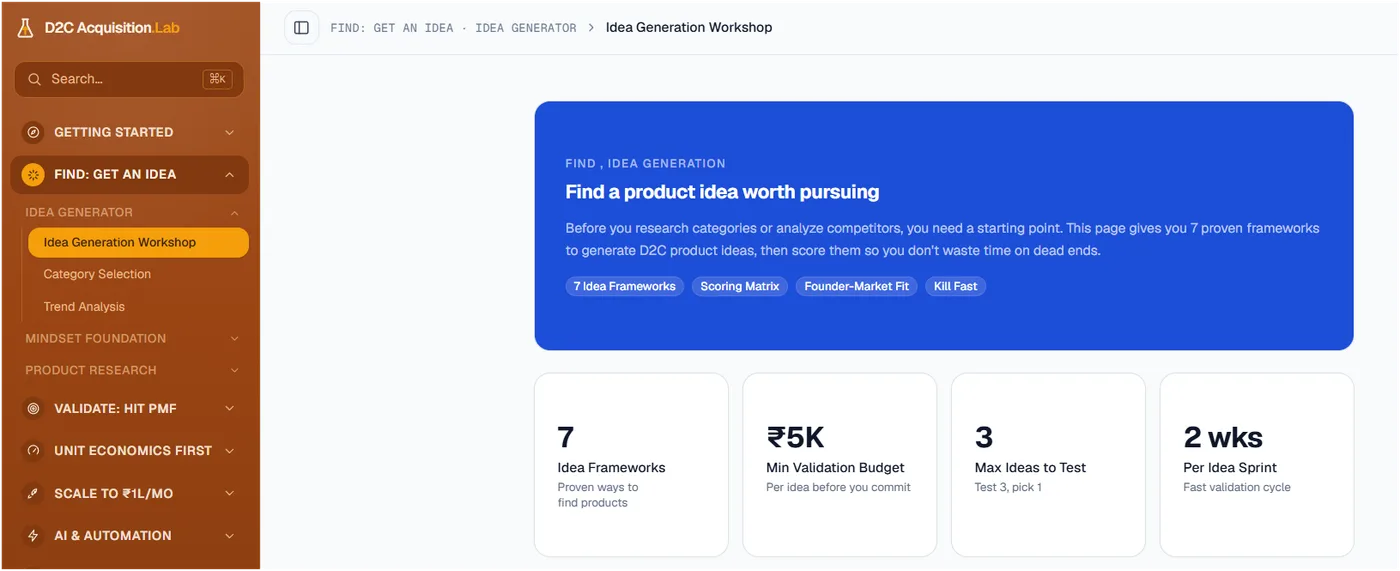
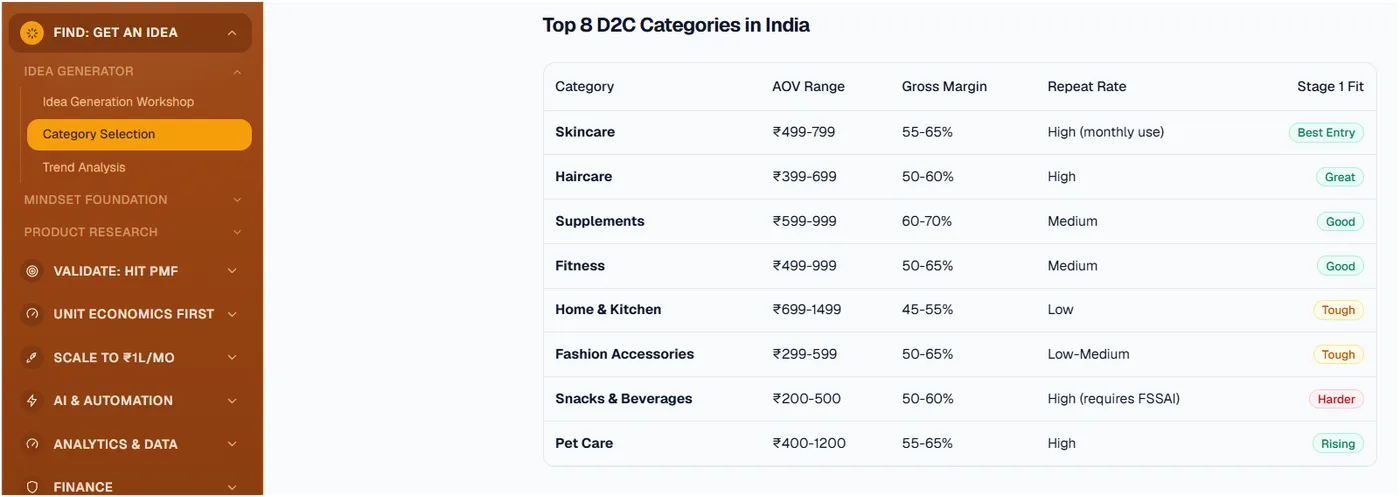
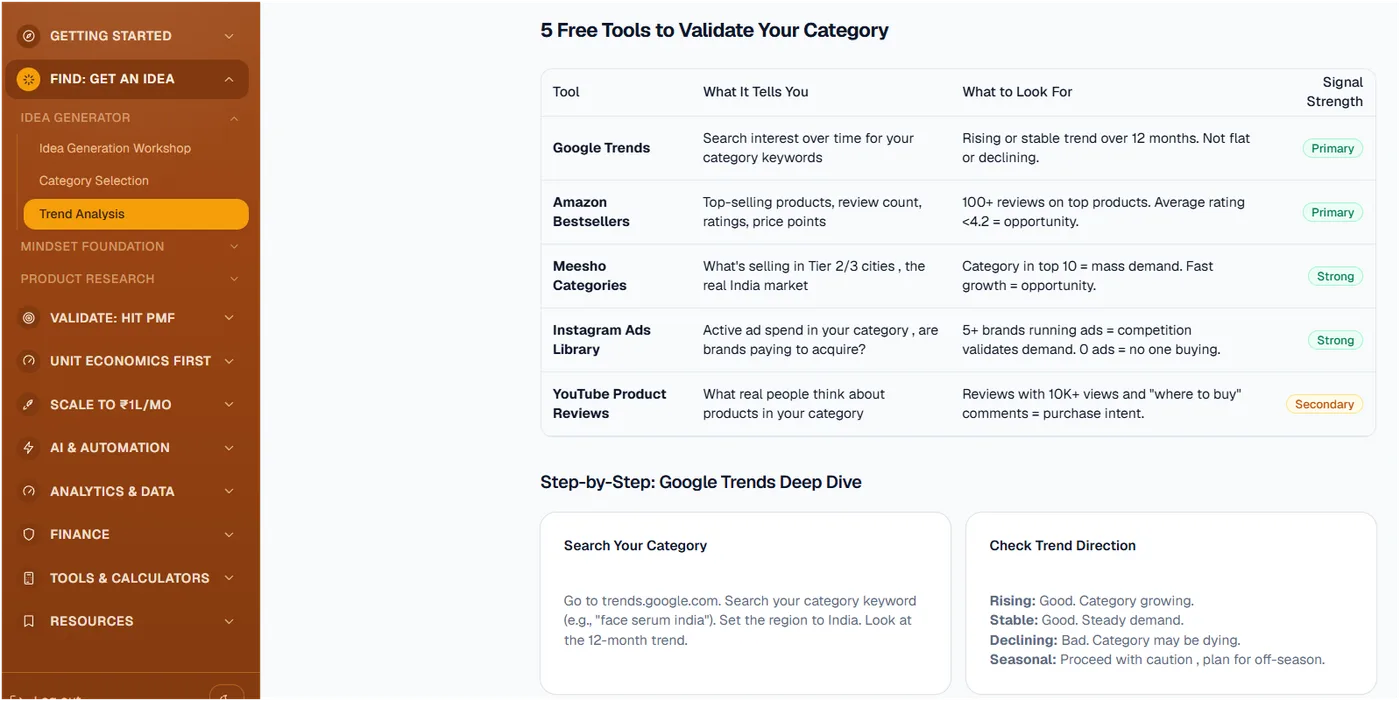
You have ₹50,000.
Or ₹1 lakh. Or ₹5 lakh.
Good. That's enough to start. Here's what you don't need:
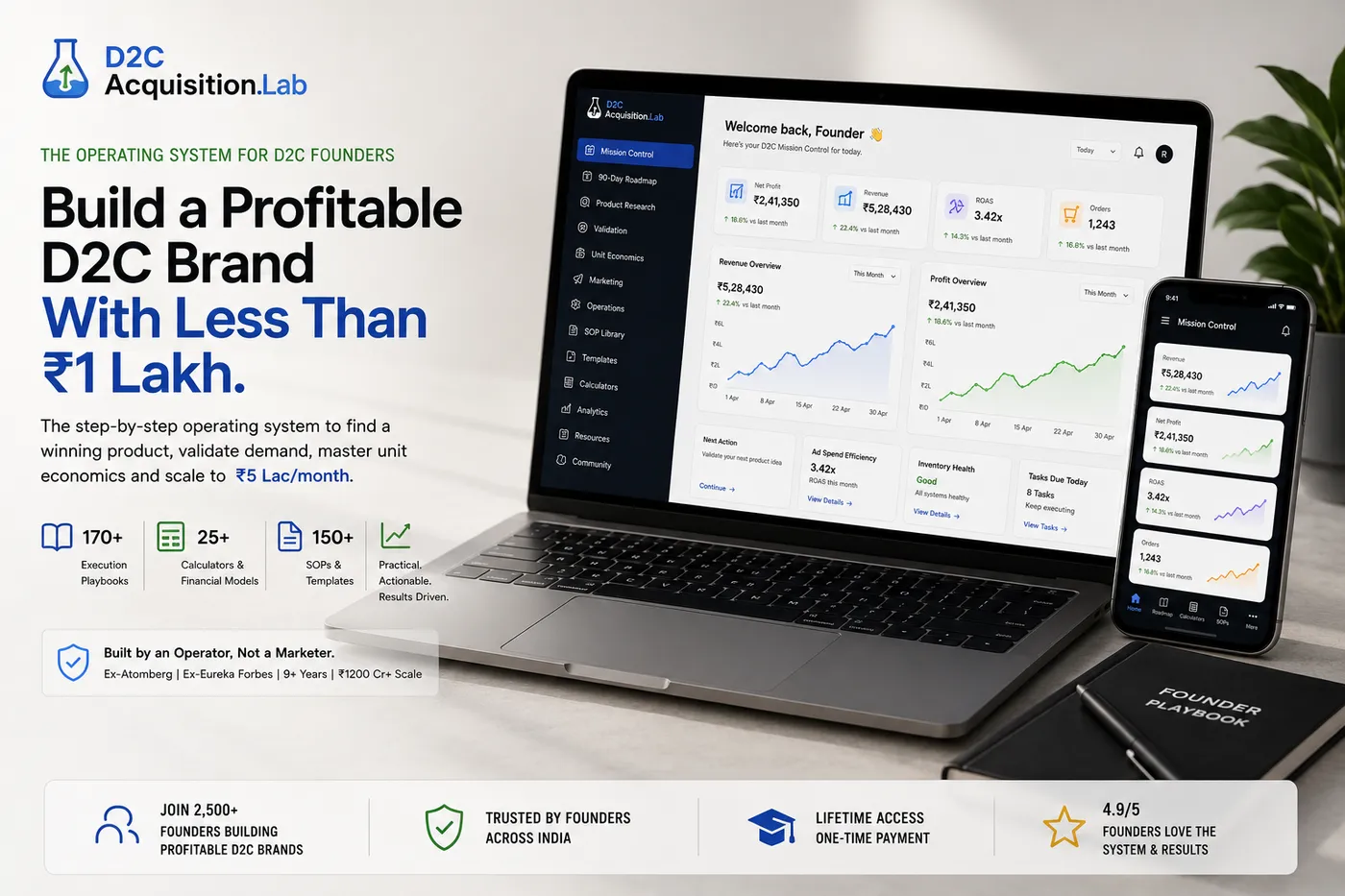
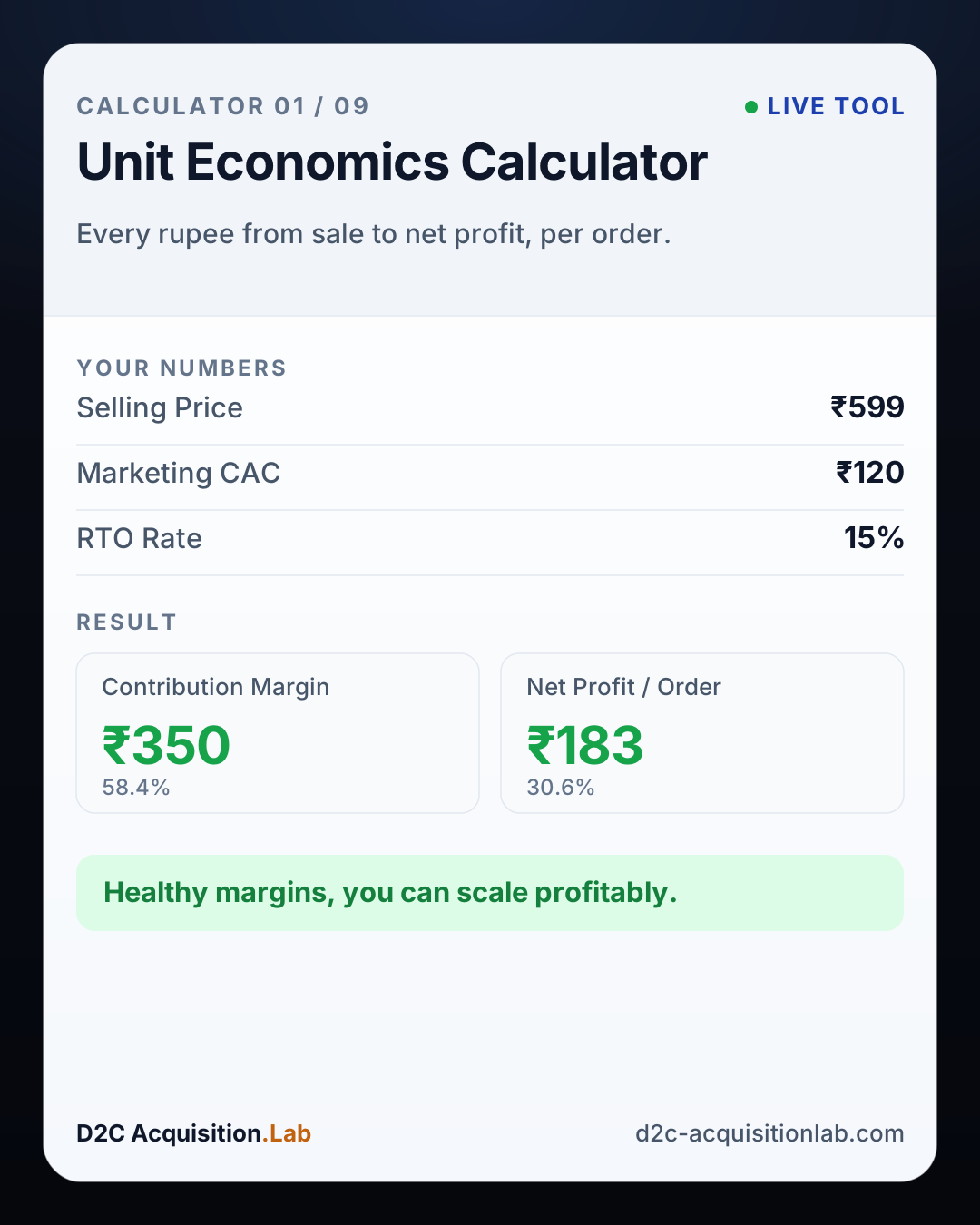
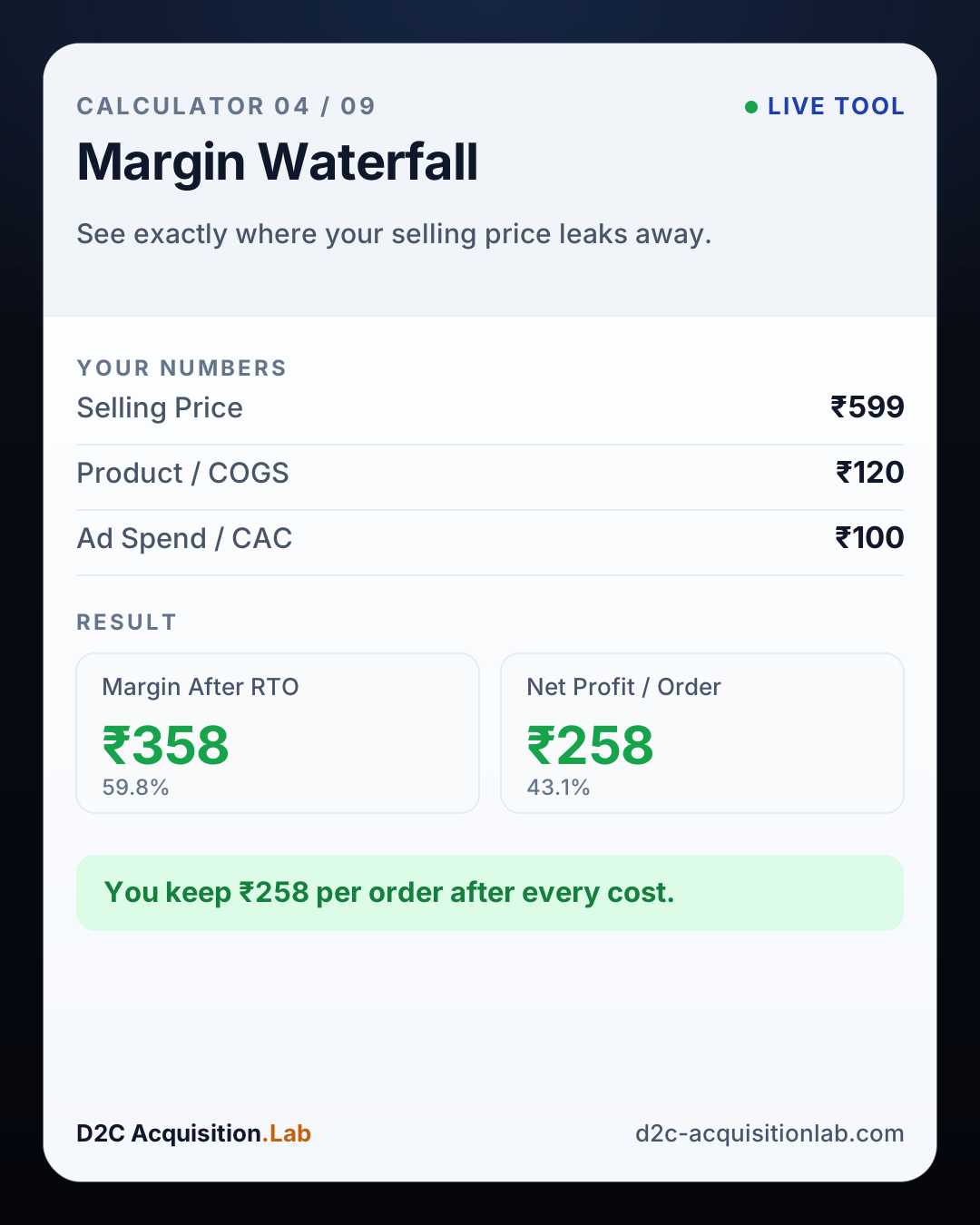
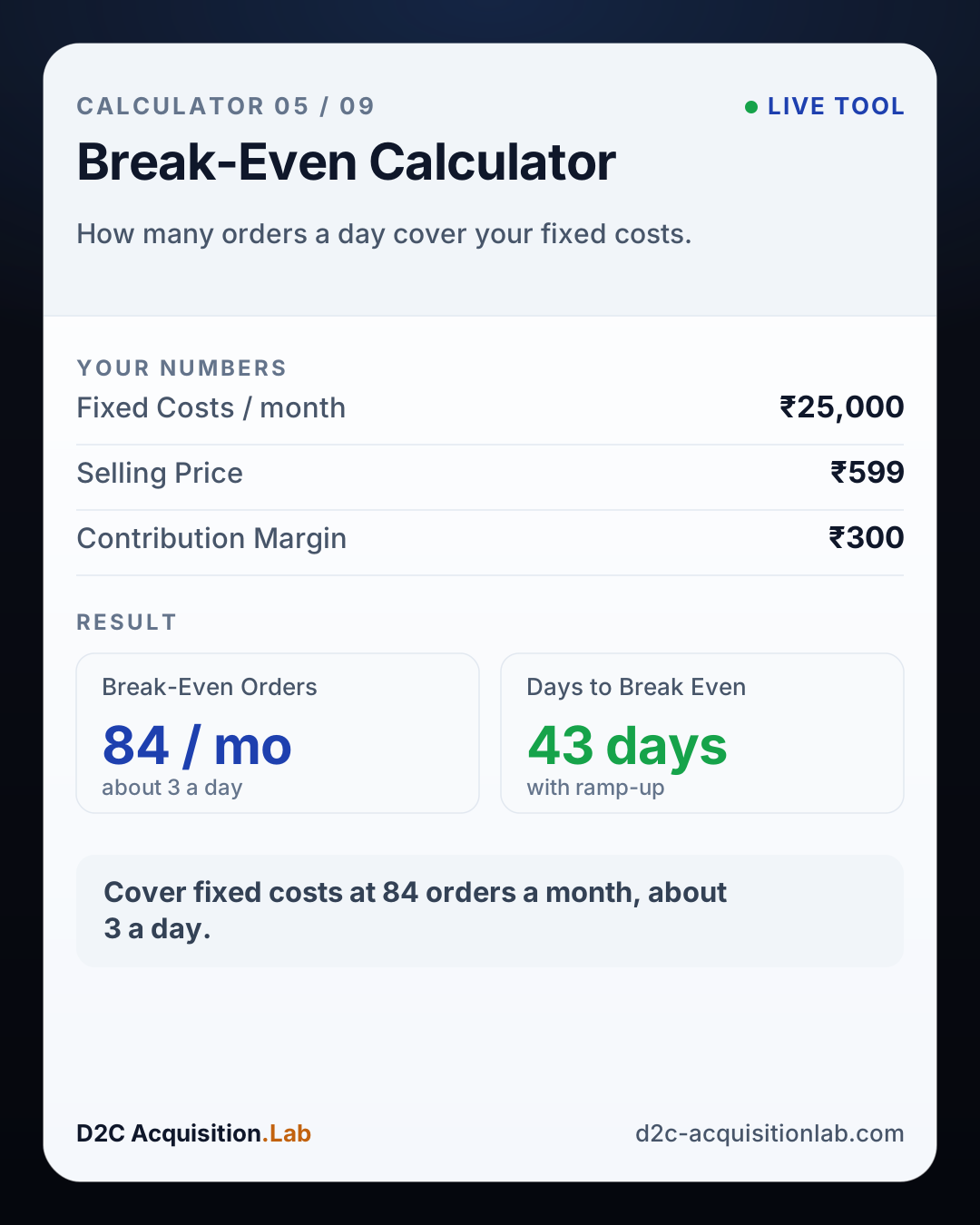
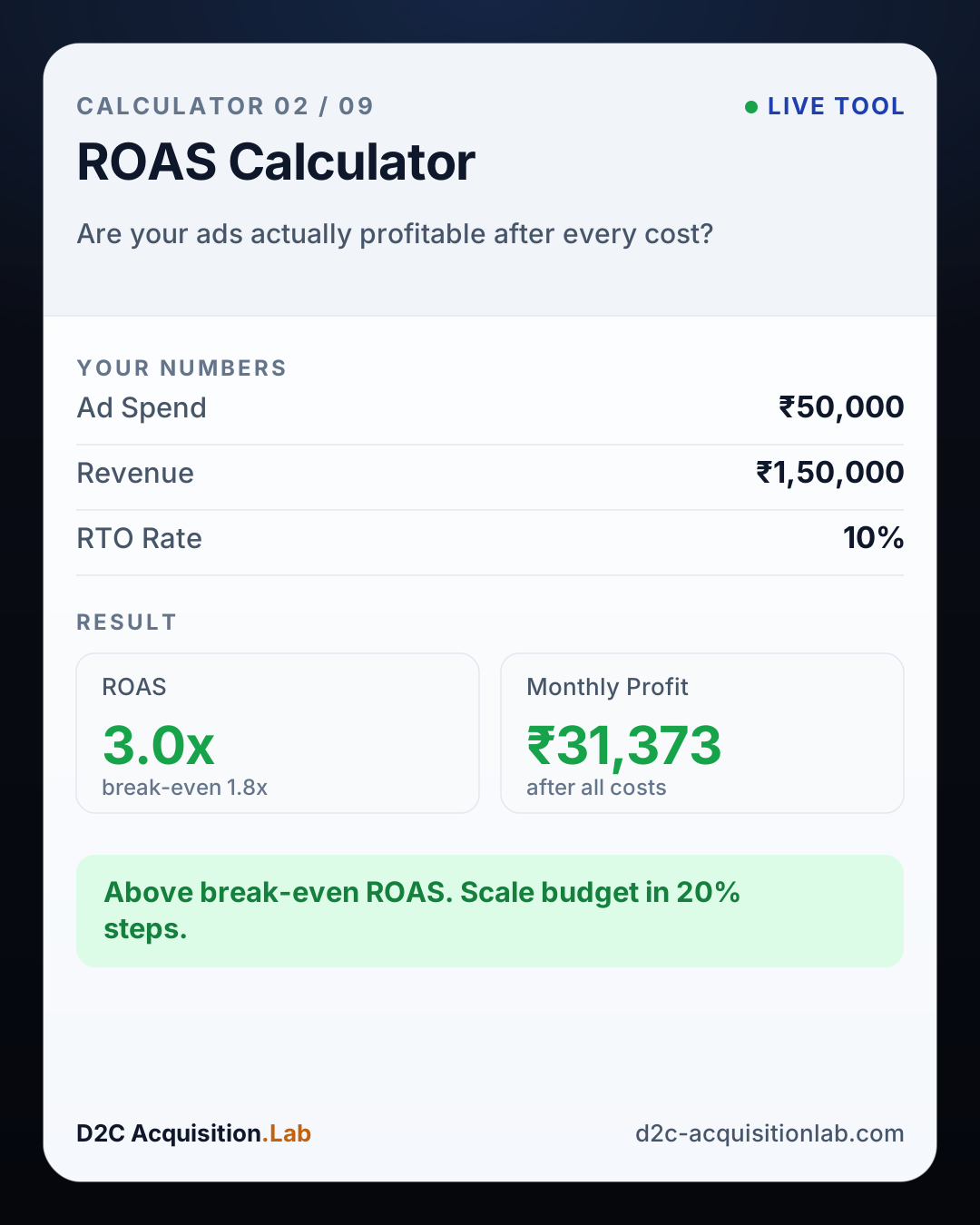
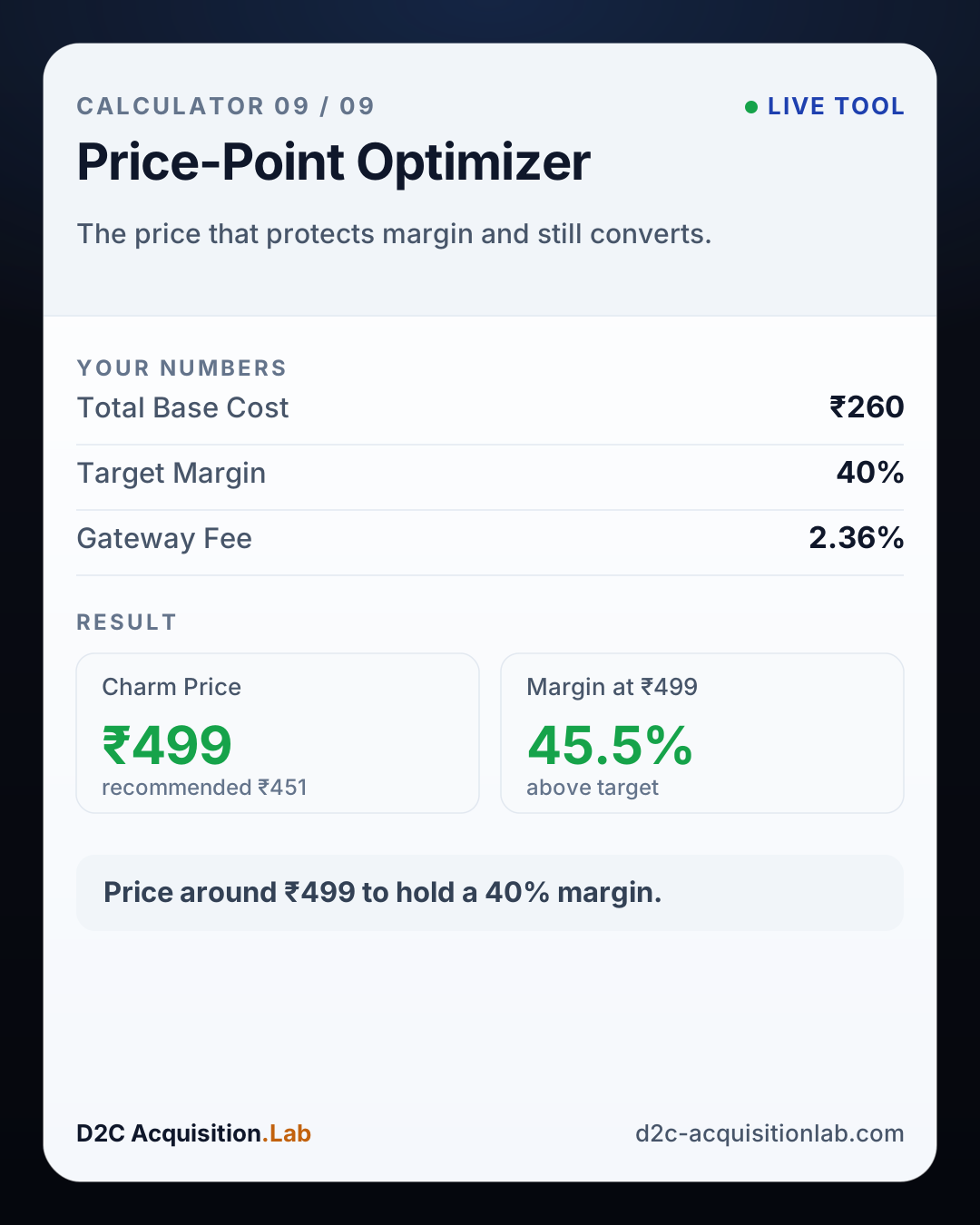
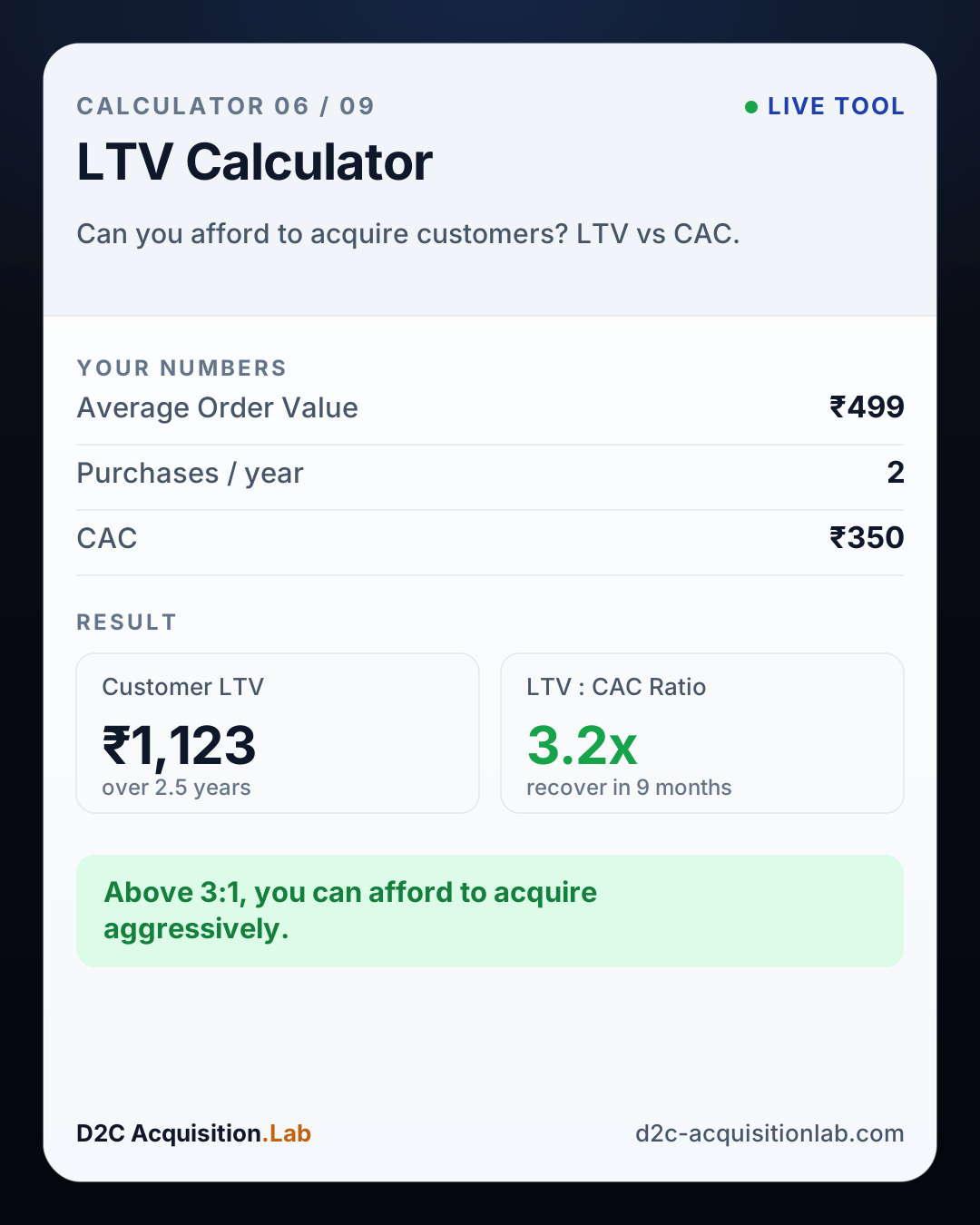
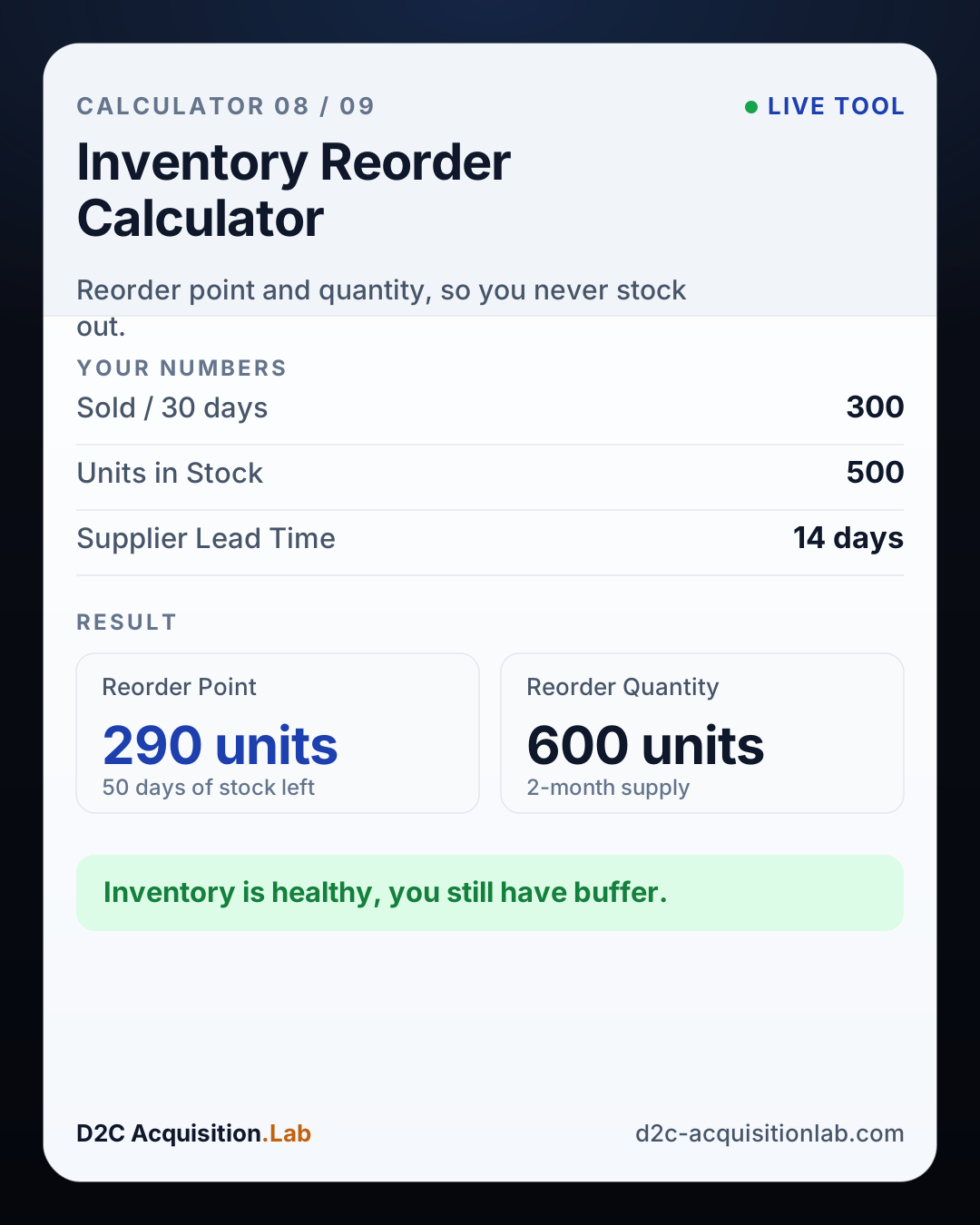
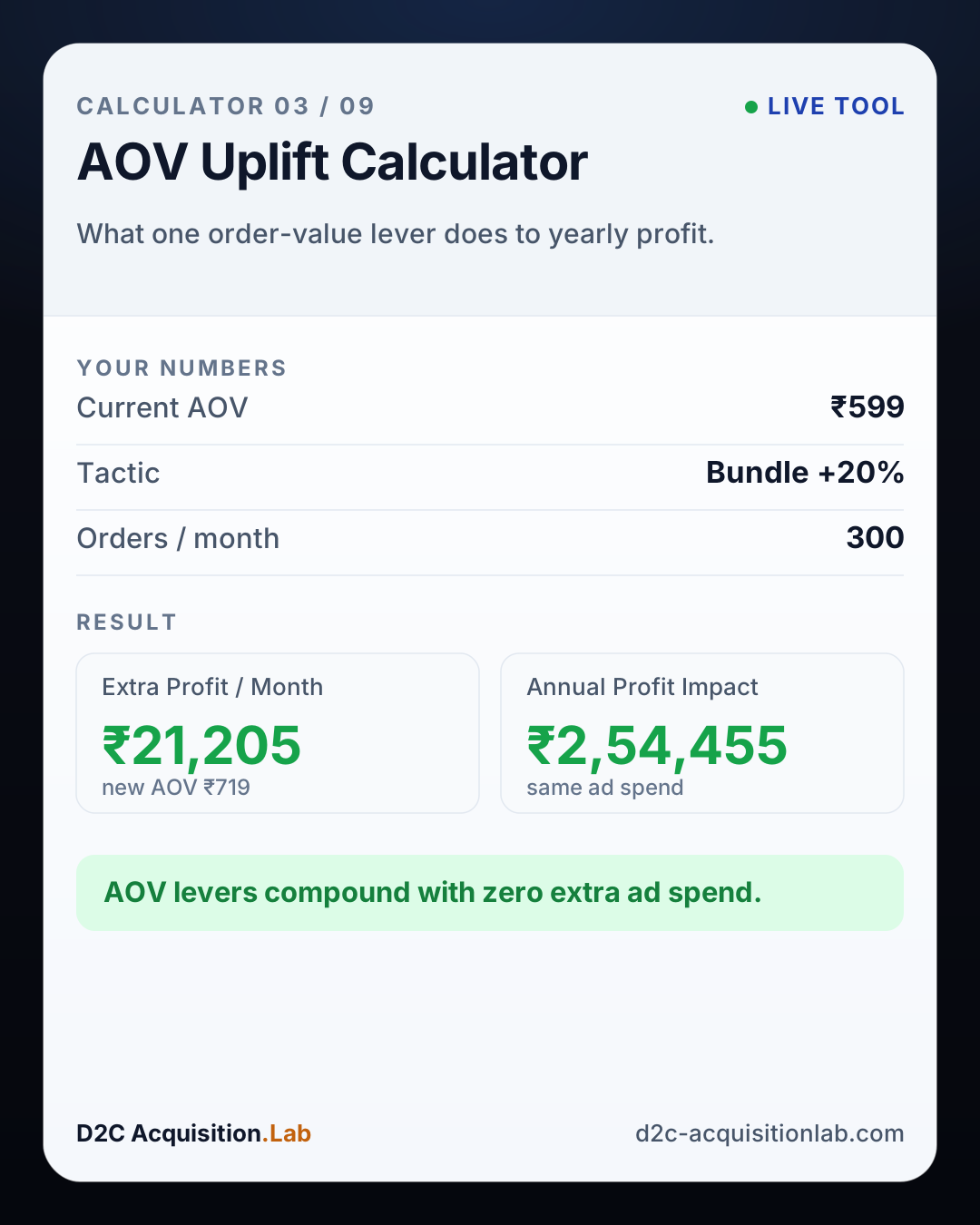
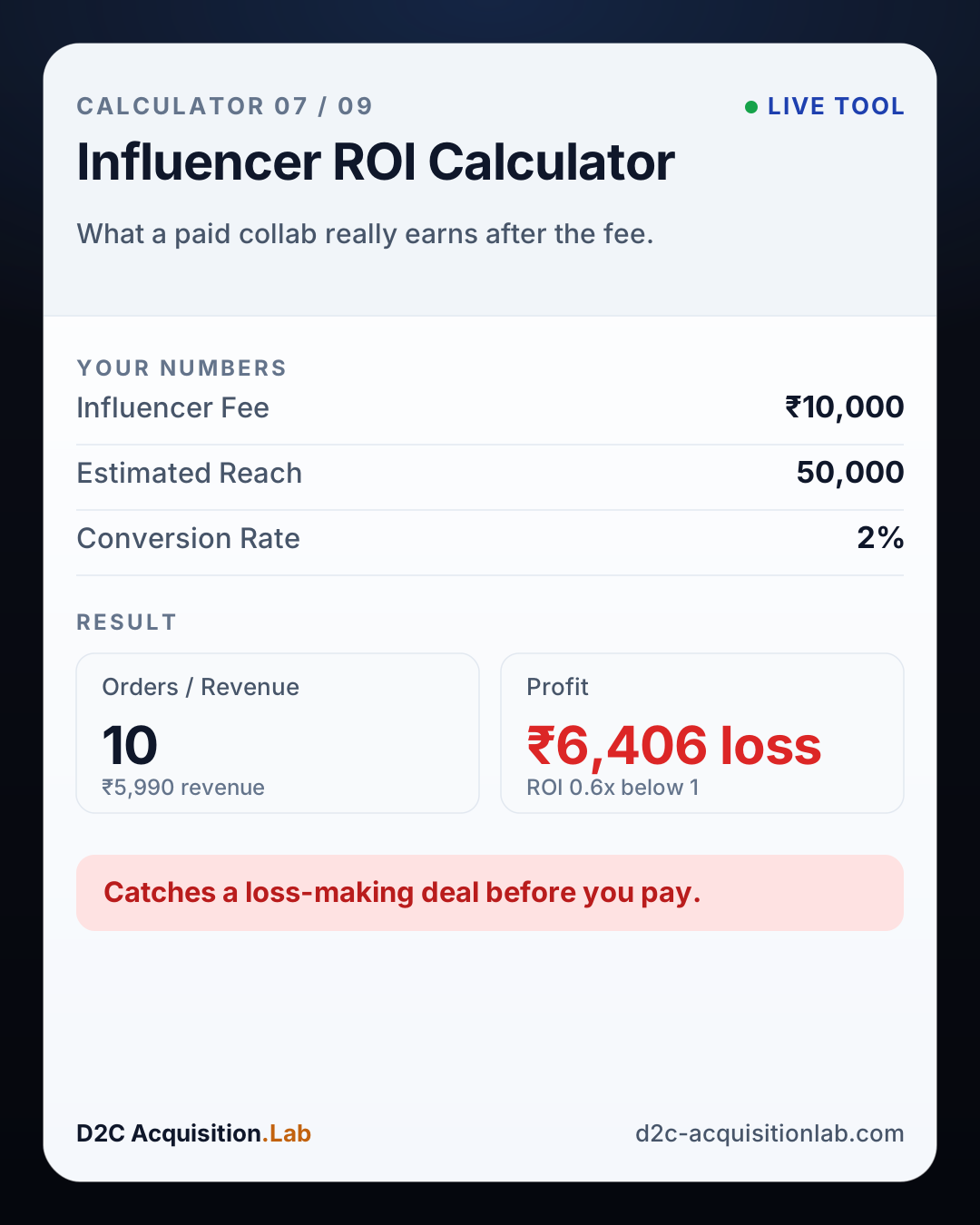
9 live calculators.
Run your numbers before you spend a rupee.
Margin, RTO, break-even, ROAS, LTV, pricing, inventory. These are the real screens, with real example numbers.
24 categories.
The launch math for each one is free.
Costs, licences, sourcing clusters and the RTO exposure of each category, on one playbook each. Pick yours, then run its numbers in the calculator above.
Not on the list? All category playbooks cover 50+ categories, from sarees to pet food.
Because I've already spent the money you're about to.


9+ years running supply chain and operations for consumer brands. Helped scale Atomberg's operations from ₹400 crore to ₹1,200 crore. Led national distribution at Eureka Forbes, a ₹3,500 crore business. Built my own D2C brands, including the ones that failed and taught me the most.
I'm not a marketer who found out courses sell. I'm an operator who knows the exact numbers that quietly kill D2C brands: RTO, margins, MOQ, CAC, and the order you have to get them right in.
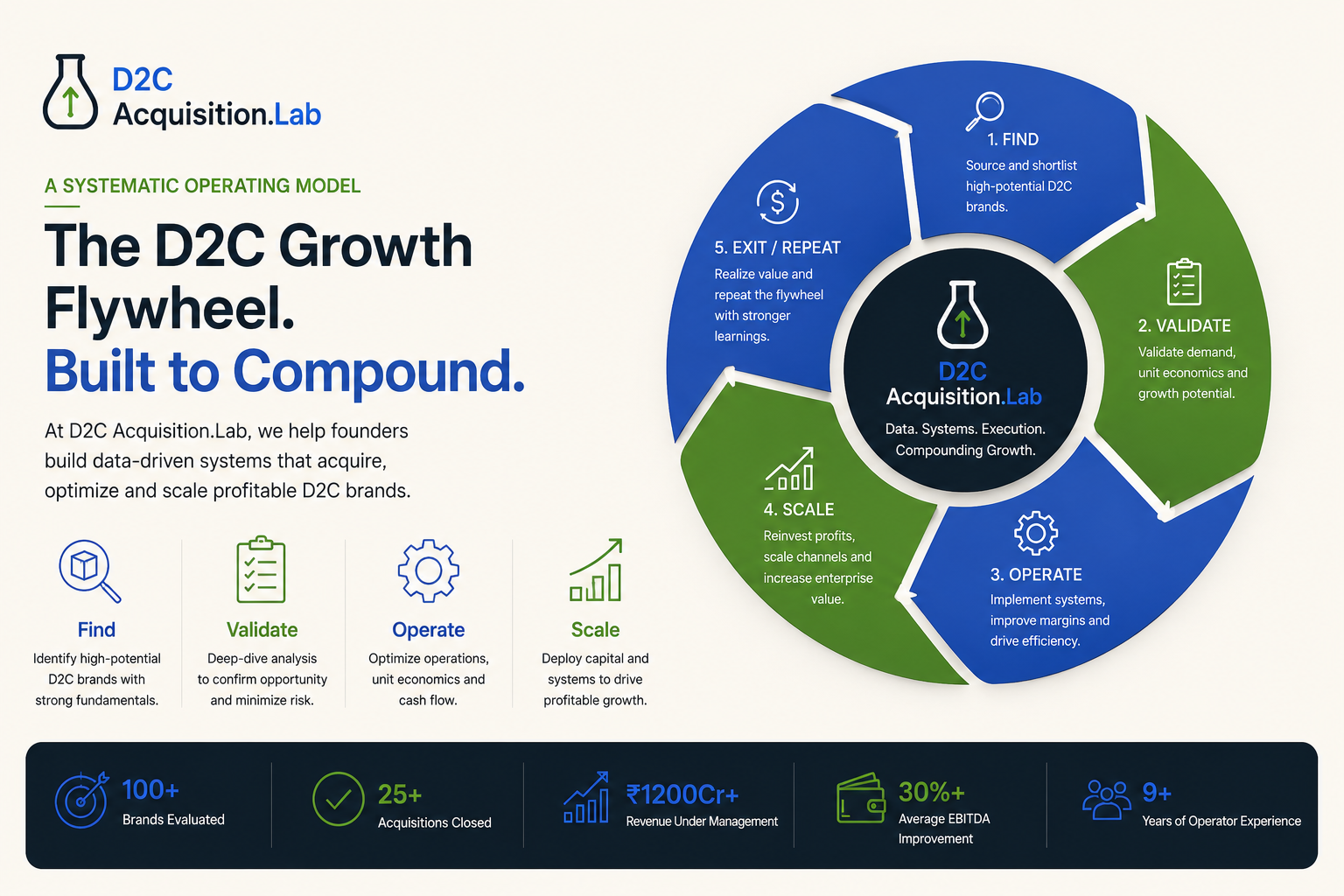
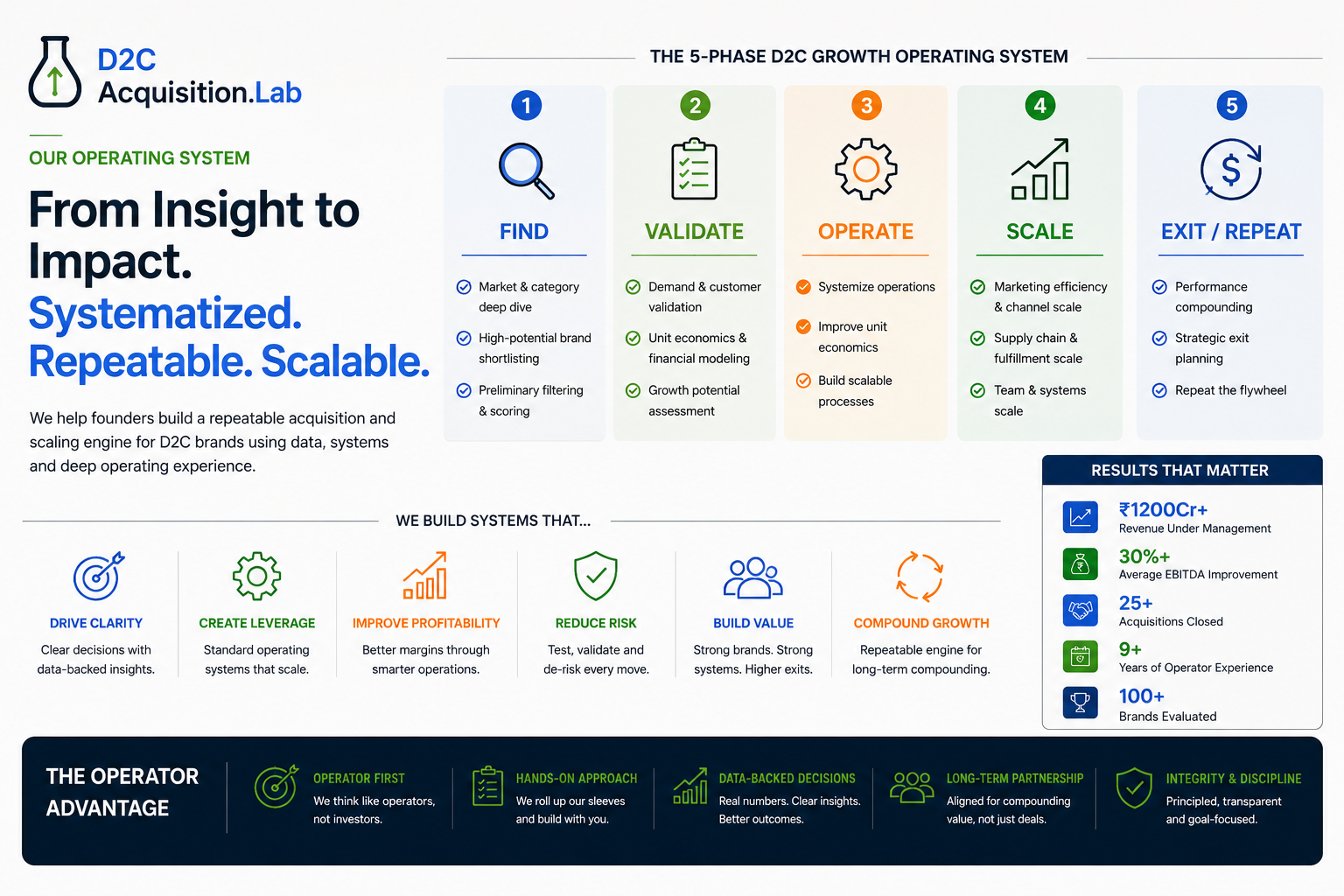
Things you'll actually use,
not videos you'll forget.
Your competition isn't another course. It's the version of you still "researching" six months from now.
A useful explanation should help you make a decision. Start with the buyer, the evidence you have and the next commitment you are considering. Then use a relevant tool or playbook to work through what is still unknown.
This is not a course.
It's your operating manual.
No lessons to binge. No modules to forget. A step-by-step system that tells you what to build, what to ignore, and where every rupee goes, in the exact order the decisions hit you.
Meet the co-founder you couldn't afford to hire.
Not a teacher. Not a mentor. Not a YouTuber. An operator who already made the expensive mistakes, so you skip them.
ChatGPT answers the question you ask.
This tells you which question to ask next.
90 days. 6 checkpoints.
Every milestone to your first ₹1 lakh month.
Not "watch when you feel like it." The 12 phases inside the system, grouped into six checkpoints with a real checklist each, from finding your idea to your first ₹1 lakh month. Swipe through the exact system.
Every step has a public guide.
The system puts them in order.
Read them free. What you pay for is the sequence, the calculators and the SOPs that turn each guide into a task you finish this week.
Where every rupee of ₹1 lakh goes.
An illustrative ₹1,00,000 planning budget. Replace each allocation with quotes and costs for your product.
The ₹20,000 test allocation is an example, not a required spend. Start with a smaller deliverable test if appropriate, set a loss limit, and decide what evidence would justify the next commitment.
Four checks before
you increase the commitment.
Choose test targets before spending. The right decision depends on the buyer, offer, costs and size of the next commitment. No single percentage certifies a business.
| Gate | What to check | How to use the evidence |
|---|---|---|
| Interest test | Relevant buyer attention, with a clear offer | Check who responds and what they understood. Compare like-for-like messages and sources. A click can help you choose the next experiment, but it does not establish willingness to pay. |
| Purchase test | Paid commitments, with delivery obligations recorded | Separate conversations, reservations, deposits and completed purchases. Record price, source, delivery and refunds. A small paid test may justify another test; it does not establish market size. |
| COD RTO | Actual return costs, by payment method and cohort | Use your delivered-order contribution and failed-delivery loss to model the mix. Include forward and return freight, packaging, payment fees and damaged stock where applicable. An industry average is not your break-even point. |
| Scale economics | Contribution and cash at the next volume | Include acquisition, fulfilment, refunds, overhead and the cash needed before the next batch sells. Use observed repeat purchasing when available. Forecast lifetime value separately from contribution already earned. |
Worked examples and definitions are in the D2C unit economics guide and the RTO reduction playbook.
Not a waitlist.
Founders already building with it.
Members of the original release, quoted under their own names and brands.
Try one decision.
Then inspect the full system.
Use the free seven-day idea test, read a worked guide, and inspect the lesson and calculator previews above. Choose the paid system if the sequence and format fit your next decisions.
Don't quit your job.
Don't burn your savings.
Build this after work, at night and on weekends, until the numbers prove it's time to go all in. That's how you start a real business without betting your life on it. This system is designed for exactly that: an operator's pace, not a hype cycle.
Choose the support
your next decision needs.
| Free guides and videos | Live cohort | Agency | D2C Acquisition.Lab | |
|---|---|---|---|---|
| Access price | Usually free | Provider-specific | Scope-specific | ₹1,999 once |
| Typical format | Individual topics | Scheduled group learning | Services and deliverables | Written sequence + tools |
| Personal feedback | Usually not included | Check the program | Defined in contract | Not included |
| Who executes | You | You, with stated support | Depends on contract | You |
| What to inspect | Source and relevance | Mentors, schedule, support | Scope and ownership | 163 steps, 9 calculators, 50+ SOPs |
| Refund terms | Not applicable | Provider policy | Contract terms | 7-day refund |
These are delivery models, not a verdict on every provider. Inspect the curriculum, support, scope and terms of any offer. Choose this system if you want a self-directed sequence for building a consumer-product business.
The full operating system.
₹1,999, one time.
Less than one dinner out. Less than one failed ad test.
- 90-day operating system, week by week
- 163 action steps in the right order
- 9 live calculators (margin, RTO, CAC, ROAS…)
- 50+ copy-paste SOPs and templates
- Lifetime access and every future update
Inspect the examples above. If you need the complete decision sequence, the tools and written playbooks are ready inside.
Try it for 7 days. Risk-free.
If it's not for you, message us on WhatsApp within 7 days. Full refund. No forms, no questions, no "are you sure". I'd rather you trust me than feel stuck with something you won't use.
Questions founders ask
before they start a D2C brand.
Is this just another course?
This is a written, self-directed operating system: 163 action steps, calculators and SOPs arranged around the decisions a first-time consumer-product founder faces. Inspect the examples to see whether this format fits how you work. Live teaching and personal consulting are not included.
I have a full-time job. Will I have time?
Yes. It's built to run at an operator's pace, nights and weekends. Each week has one clear job. You don't quit anything until your own numbers tell you it's time.
I don't have a product idea yet. Is this for me?
Start with the free idea-test tool. Weeks 1 and 2 of the paid roadmap cover product selection and testing buying intent before a larger inventory commitment. You still need access to prospective buyers and a test budget you can afford.
How is this different from free YouTube content?
Free guides and videos can be useful. The paid system brings the decision sequence, written lessons, calculators and SOPs into one place. You are paying for that organised working format and access, not exclusive information or a guaranteed result.
Do I need technical skills or a developer?
No. Weeks 9 and 10 walk you through building the Shopify store yourself, no code, no developer. If you can use WhatsApp and a spreadsheet, you can do this.
Which licences and registrations does a D2C brand in India need?
Requirements depend on your product, location, business structure and selling channels. Phase 6 and the free guides explain the questions to check, including tax, brand registration and category-specific permissions. Confirm the current requirements for your actual business with the relevant authority or a qualified professional before launch.
How long does it take a D2C brand to break even?
There is no single timeline. Use the break-even calculator with your actual price, costs, shipping, returns and acquisition assumptions. Then check those assumptions against a small test. A calculator result or one validation budget cannot prove future profitability.
What happens after day 90?
The roadmap covers validation, launch and the checks needed before scaling. Your pace and results depend on the product, buyers, budget and execution. The later phases cover acquisition, repeat purchase, cash flow and operations. Revenue milestones are targets to test against your numbers, not guaranteed outcomes by a date.
Is ₹1,999 really the full price? Any hidden fees?
Yes. ₹1,999 is the one-time access price, including future updates. Inventory, registrations, store subscriptions, advertising and other business expenses are separate. You are buying a self-directed operating system, not personal consulting or a guaranteed business result.
What if it's not for me?
7-day, no-questions-asked refund. Message us on WhatsApp within 7 days and you get every rupee back. No forms, no “are you sure”, no friction.
Last updated 23 September 2026. Prices, fees and thresholds are re-checked against the Lab's facts file every quarter.
Stop researching.
Start building.
The operating system is ₹1,999, one time, with lifetime access. Start with one buyer, one offer and one test.